How to Write Jobs and Careers Content in Candidate Language: 2026 Guide
Published · 41 min read · by SonicJobs
Published November 1, 2026 by SonicJobs
Learn how to write job descriptions in candidate language: covering pay, shifts, and benefits, with SonicJobs CareerGPT and Employer GPT Visibility.
Introduction: Why Candidate Language Is the Missing Layer in Most Job Descriptions
“No weekend shifts?”
That question lands in the search bar of an employer’s career site dozens of times a week. The job description says “flexible scheduling required.” Neither answer is wrong, but only one of them is in the words the candidate used.
This guide shows how to rewrite four content categories (pay, shifts and schedules, benefits, and eligibility) so they answer what candidates are actually asking. Each section includes before/after rewrites tied to real candidate questions. SonicJobs CareerGPT captures those questions as first-party intent data directly from employer career sites, surfacing the roles, benefits, and doubts candidates ask about but rarely find answered. That data is the starting point for writing careers content that works in 2026.
What Is Candidate Language in Job Descriptions?
Candidate language is the specific, natural phrasing people use when they research a role: “Do you pay weekly?” “Are there overnight shifts?” “Do I need a degree?” Employer language is what most job descriptions actually contain: “competitive compensation,” “dynamic team,” “fast-paced environment.” The first set gives a candidate something to act on. The second gives them nothing concrete.
The gap is wider than it looks. An AdView analysis of more than one million job ads found “fast-paced,” “dynamic,” and “team player” were the most common terms across postings. These phrases are routine to recruiting teams and meaningless to the candidates reading them, particularly people changing careers who have no insider frame of reference to decode them.
Jargon does not just fail to inform. A Titus Talent analysis found that corporate-speak in job descriptions actively repels qualified applicants, creates confusion about what a role actually involves, and erodes trust before a candidate reaches the application. When “competitive salary” appears where a figure should be, candidates read the absence of a number as a signal, not a placeholder.
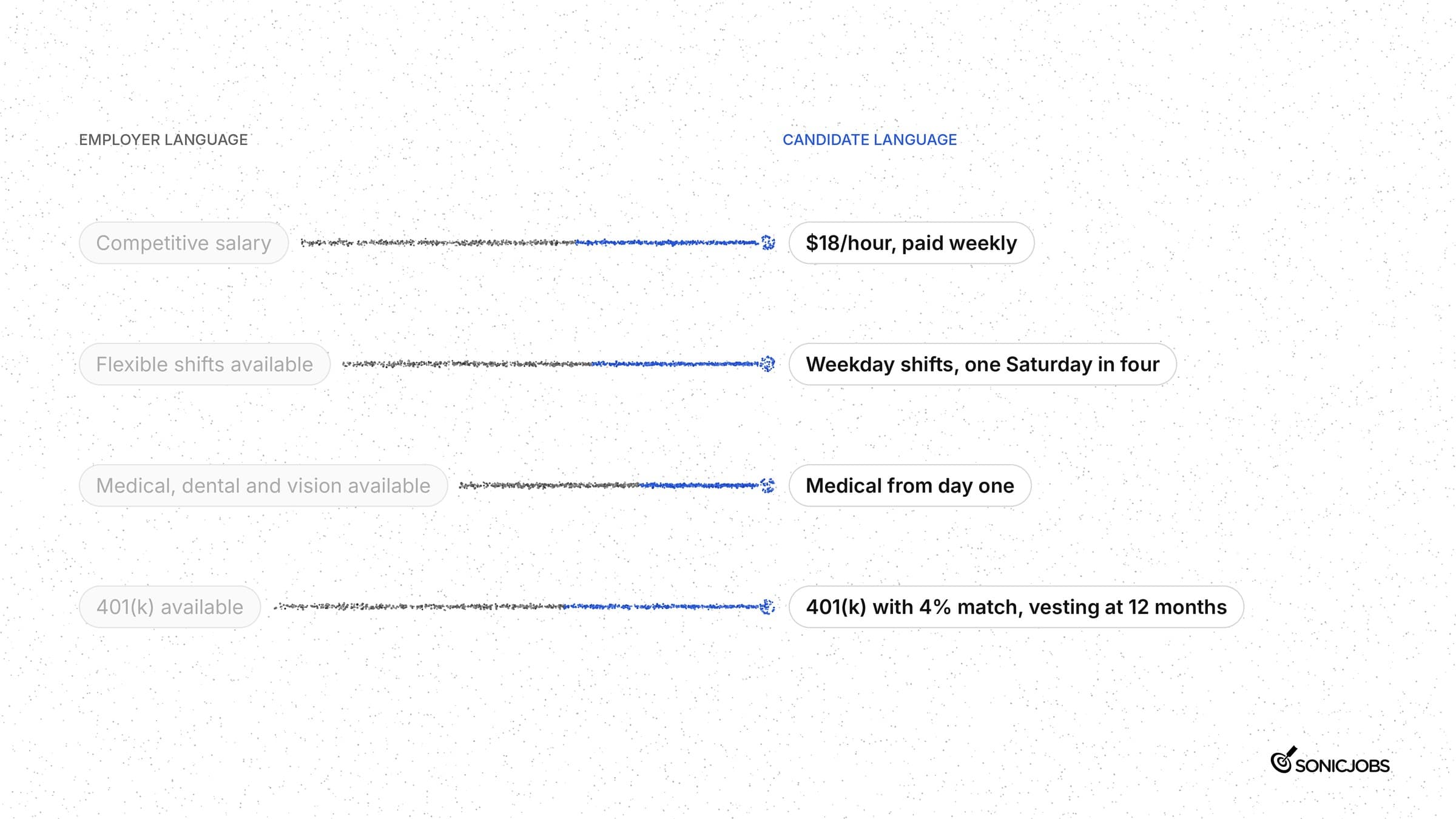
Candidate language is the specific alternative: “$18/hour, paid weekly” instead of “competitive compensation”; “rotating weekends required” instead of “flexible schedule.” The words come from what candidates actually ask, not from what is conventional in job ads.
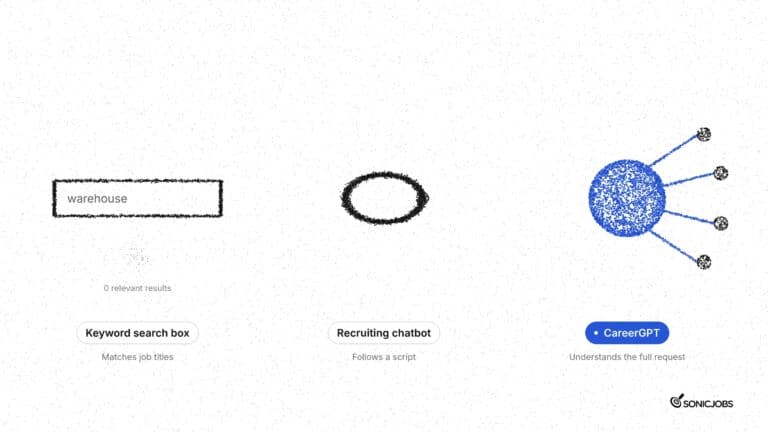
SonicJobs CareerGPT makes that source material visible. It captures every question a candidate types on an employer’s career site as first-party intent data, surfacing the roles, benefits and doubts candidates actually ask about. Rather than guessing what language candidates use, recruiting teams can read it directly and use it to close the gap.
Why Writing in Candidate Language Matters in 2026
Three separate pressures are converging in 2026, and each one traces back to the same root cause: job content that answers employer questions instead of candidate questions.
Application completion rates reveal how much vague copy costs
Only 5% of candidates who start a job application finish it, according to the Appcast Recruitment Advertising Benchmark Report 2024 (cited by SonicJobs). The majority leave before submitting. Some drop off because the process is long, but many leave earlier, at the job description itself, because the information they needed to decide wasn’t there. Copy that speaks in employer jargon rather than candidate questions accelerates that exit.
Pay transparency laws have made salary omission a compliance issue
California, New York, Washington, and Colorado now require employers to include salary ranges in job postings as of 2026. This is no longer a best-practice recommendation. Industry research also confirms that salary is the single part of a job ad that candidates rate as most helpful, most appealing, and most likely to make them apply. Posting a role without pay information loses both qualified candidates and, in covered states, legal compliance.
Candidates research employers in AI tools before they reach your career site
Candidates now use ChatGPT, Claude, and Gemini to research employers, compare benefits, and get job-hunting guidance before visiting a career site. SonicJobs describes this shift directly: candidates are “starting in ChatGPT” rather than on job boards, and when they do, the AI model surfaces employers whose published content answers the questions being asked. Vague job descriptions that use employer-side phrasing don’t get surfaced. Specific, candidate-language content does.
‘Shift Shock’ makes vague promises expensive in 2026
A 2026 HR buzzword analysis from Cangrade names “Shift Shock” as a key candidate pain point: the disconnect between what a job posting promised and the reality of the job. When content relies on abstract phrases rather than concrete details about pay, schedule, and expectations, candidates who do apply often arrive with inaccurate expectations. That drives early attrition, which costs more than the unfilled role did.
Taken together, these four pressures mean that imprecise job content now carries a measurable cost: lost applications, compliance exposure, reduced AI answer engine visibility, and higher attrition from mismatched hires.
Common Challenges in Writing Candidate-Language Job Content, and How to Solve Them
Key Problems Employers Encounter
Problem 1, Jargon substitution. Phrases like “competitive compensation” and “dynamic team” give candidates no actionable information. Research from Titus Talent confirms that corporate-speak repels top talent, confuses applicants, and erodes trust, because candidates read “competitive salary” as a deliberate evasion, not a selling point.
Problem 2, Schedule ambiguity. A posting that omits shift times, weekend requirements, and rotation patterns forces candidates to guess or apply blind. When the job turns out to differ from what was implied, candidates experience what a 2026 HR analysis calls “Shift Shock”, the disconnect between what a posting promised and the reality of the role. That gap damages both candidate trust and employer brand.
Problem 3, Surface-level benefits listing. Writing “medical, dental, vision” answers the category question, not the candidate question. Candidates want to know when coverage starts (day one or after a waiting period?), how much the employer contributes, and whether the retirement match vests immediately or over three years. Those details determine whether a role is actually affordable during onboarding, and they are rarely in the job description.
Problem 4, No candidate feedback loop. Without real question data, employers cannot tell which content gaps are costing them applicants. A team may revise a benefits page without knowing that the actual barrier was an unanswered question about 401(k) vesting, or that candidates were dropping off because no posting mentioned weekend rotation.
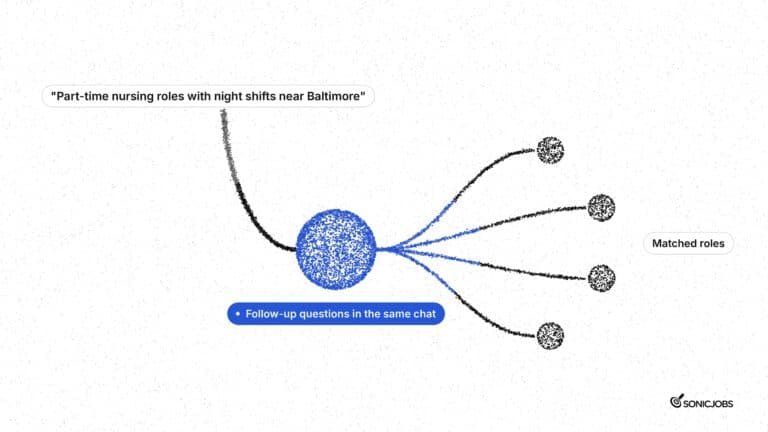
Each of these problems shares a root cause: employers write from their own vocabulary rather than the questions candidates arrive with. CareerGPT closes that gap by capturing every candidate prompt on the career site as first-party intent data, surfacing the roles, benefits, and doubts candidates actually ask about. It translates that signal into specific content recommendations, for example, flagging “Add 401(k) detail to the benefits page, High impact”, so recruiting teams know exactly where copy needs to improve, not just that something is off. Questions like “No weekend shifts?” or “Do stylists have to build their own client book?” surface in CareerGPT conversation data because candidates ask them in plain language, even when no job description comes close to answering them.
What to Look for in a Job Description Writing Framework for Candidate Language
A candidate-language job description is not just clearer copy. It answers the questions candidates are carrying before they ever reach your career site. The five criteria below are the practical test. If your current framework does not address all five, content gaps are already costing you applications.
Must-Have Elements of Candidate-Language Job Content
Pay specificity: rate, unit, and pay period
Write “$20/hour, paid biweekly” or “$52,000/year” rather than a band label or a single annual figure stripped of context. Candidates need to calculate a weekly take-home, not reverse-engineer a salary range. Joveo’s 2026 job description guide recommends stating the time period alongside the figure and breaking down the full compensation package for “the complete picture.”
Schedule clarity: shift windows, weekends, and on-call
State the exact hours and rotation. “Monday-Friday, 8am-4pm, with one weekend shift per month” removes a source of friction that vague phrases like “flexible schedule” create. Dover’s 2026 guide notes that hybrid is now the market default, so vague location or schedule language reads as evasive rather than flexible.
Benefits with eligibility dates and contribution details
Candidates ask whether coverage starts on day one or after a waiting period, because a gap can leave them uninsured for weeks. They also ask about retirement match amounts and vesting schedules, because a 3-year cliff changes whether the employer contribution is actually theirs to keep. Naming benefits is not enough. Coverage start date, employer contribution percentage, and vesting timeline are the details candidates need to evaluate an offer.
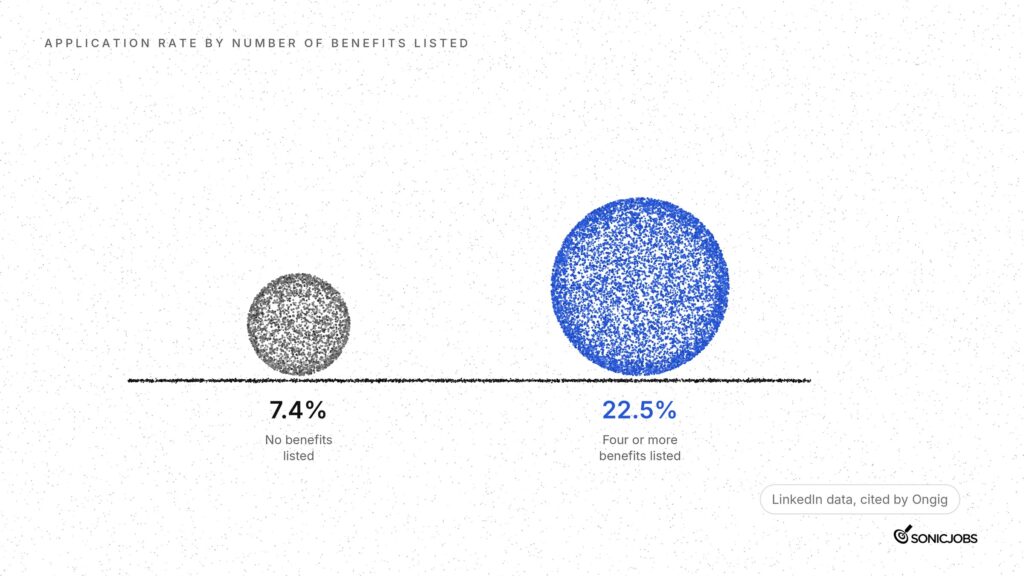
The stakes are measurable. LinkedIn data cited by Ongig shows application rates rise from 7.4% when no benefits are listed to 22.5% when four or more are listed. Compensation and benefits is the first thing candidates look at in a job ad.
AI-quotable structure: question-and-answer format LLMs can extract
Job postings are increasingly surfaced inside AI answer engines. Joveo’s career site GEO guide recommends writing clear question-and-answer content that a large language model can lift verbatim, and ensuring job postings use valid JobPosting schema that matches visible page content. If your job description buries pay and schedule in a paragraph of prose, an LLM cannot easily extract and cite it. A Q&A format fixes that.
First-party intent data: a mechanism to know what candidates are actually asking
The four criteria above improve what you write. This one tells you what to write next. Without a way to capture the questions candidates are typing on your career site, content decisions are guesswork.
SonicJobs CareerGPT addresses this directly. It captures every candidate prompt on the employer’s career site as first-party intent data, surfacing the roles, benefits, and doubts candidates actually raise. When the same question appears repeatedly and no content on the site answers it, that is a documented gap with a clear fix.
SonicJobs Employer GPT Visibility extends this to external AI platforms. It shows employers where they appear and who appears instead on ChatGPT, Claude, and Gemini, so a recruiting team can identify which competitor is the default answer before candidates make that comparison themselves.
Taken together, these five criteria give a job description framework its functional edge: specific enough for a candidate to act on, structured for AI retrieval, and connected to the real questions candidates bring to the search.
How Employers Rewrite Job and Careers Content in Candidate Language: Before/After Examples
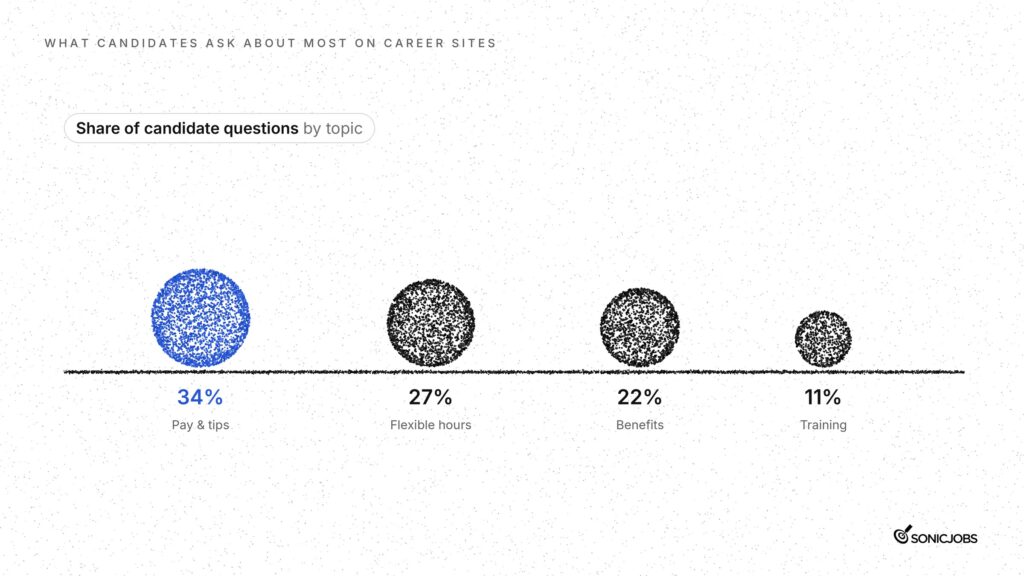
SonicJobs data shows the four categories candidates ask about most on career sites: Pay & tips (34%), Flexible hours (27%), Benefits (22%), and Training (11%). The rewrites below address each category directly. Every block shows the candidate question the copy needs to answer, the original employer language, and the rewritten version.
Rewriting Pay Content
Candidate question: “Do you pay weekly? What does pay progression look like?”
Before: “Competitive salary, commensurate with experience.”
After: “[$18/hour], paid weekly. Pay review at 6 months with a clear path to the next pay step.”
“Competitive salary” tells the candidate nothing specific. A Pin analysis of 29,000+ job descriptions found that only 47.4% disclose a salary figure at all, and posting a range outperforms hiding it on every funnel metric measured. Breaking down pay by hour and pay period answers the question directly and removes a reason to abandon the listing.
Rewriting Shift and Schedule Content
Candidate question: “Are there weekend shifts? No weekend shifts?”
Before: “Flexible shifts available. Hours may vary.”
After: “Weekday shifts, 9 am-5 pm. One Saturday in four. No on-call.”
CareerGPT surfaces questions like “No weekend shifts?”, natural-language queries that employers rarely answer directly in job descriptions. Listing the actual pattern (weekday core, one Saturday, no on-call) removes ambiguity and helps candidates rule the role in or out before applying, which improves the quality of applications received.
Rewriting Benefits Content
Candidate question: “When does my health insurance start?”
Before: “Medical, dental, and vision benefits available.”
After: “Medical from day one. Dental and vision after 60 days. Employer covers 80% of the premium.”
Candidates ask specifically about coverage start dates because a gap between their start date and coverage beginning can leave them uninsured for weeks. Listing each benefit line, its waiting period, and the employer contribution share answers the question precisely. “Benefits available” answers nothing.
Rewriting Eligibility Content
Candidate question: “Is there a retirement match, and when does it vest?”
Before: “401(k) available.”
After: “401(k) with 4% employer match. Vesting starts at 12 months.”
Candidates ask about vesting because the employer match is not theirs to keep if they leave before the vesting date. Stating the match percentage and the vesting timeline turns a placeholder into information a candidate can factor into a real decision. “401(k) available” is the eligibility equivalent of “competitive salary.”
Each rewrite follows the same logic: identify the candidate question the copy needs to answer, strip the employer shorthand, and replace it with the specific detail the candidate needs to decide whether to apply.
Best Practices & Expert Tips for Writing Job Descriptions in Candidate Language
Each tip below names the change, states what to do, and explains why it matters for candidates and for the employers trying to reach them.
Tip 1: Disclose pay with a time unit
Write “$20/hour” or “$45,000/year,” never “competitive compensation” or “market rate.” Where the role has a full package, break down base, bonus, and any commission in the same block. A number with a time unit answers the question; a label answers nothing.
Tip 2: State the schedule in full
Include shift start and end times, rotation frequency, and any on-call expectation. For hybrid roles, state the actual split (for example, three days onsite, two remote) rather than “flexible.” In 2026, vague location language reads as evasive rather than flexible, because hybrid is the market default candidates already expect.
Tip 3: Answer benefits eligibility before candidates ask
Candidates consistently want to know when coverage starts (day one or after a waiting period), what the employee contribution rate is, and when retirement matching vests. A gap between start date and coverage can leave a new hire uninsured for weeks. Putting those details in the posting removes a barrier candidates otherwise resolve by walking away.
Tip 4: Write in question-and-answer blocks
LLMs extract and cite Q&A content more reliably than dense prose. Structure key sections as a plain question followed by a direct answer: “When does health coverage begin? Coverage begins on day one of employment.” Joveo’s guidance on career site visibility recommends writing “clear question-and-answer content that an LLM can lift verbatim” alongside valid JobPosting schema.
Tip 5: Use CareerGPT conversation data to find confirmed content gaps
When candidates ask “Do you pay weekly?” or “Is there a retirement match?” on a career site and no page answers it, that is a confirmed gap, not a hypothesis. CareerGPT captures every candidate prompt on the employer’s career site as first-party intent data, and surfaces specific recommendations: for example, “Add 401(k) detail to the benefits page, High impact.” Fix the gap in the content, and the answer exists everywhere candidates look for it.
Tip 6: Front-load the direct answer
AI answer engines cite content more readily when the page opens with a concise, direct answer to the main question rather than context, history, or preamble. For a job posting, that means leading with role, location, pay rate, and hours in the first two sentences. Put the qualification list after the essentials, not before.
Tip 7: Audit jargon systematically
“Dynamic,” “fast-paced,” and “competitive” are the three most common jargon terms in job advertising, appearing across more than one million job ads in one analysis. Each masks a specific fact. “Fast-paced” often means high call volume, short turnaround times, or frequent task-switching. Replace the label with the fact it was hiding, and the posting becomes useful to the candidate and citable by an AI answer engine.
Advantages of Writing Job Descriptions in Candidate Language
The case for candidate-language job content is not abstract. Each benefit below has a number behind it, drawn from recruitment data and SonicJobs’ own platform results.
Higher application rates when benefits are visible. LinkedIn data, cited by Ongig, shows application rates climb from 7.4% when no benefits are listed to 22.5% when four or more are included. Compensation and benefits is the first thing candidates look at in a job ad. If that information is buried in HR language or omitted entirely, a large share of high-intent visitors leave before they read anything else.
Fewer drop-offs at the consideration stage. Per the Appcast Recruitment Advertising Benchmark Report 2024, only 5% of candidates who start a job application finish it. Vague or confusing job content contributes to that gap: candidates who cannot confirm a role meets their needs will abandon the process rather than take a chance. Clearer copy gives them a reason to continue. SonicJobs’ hosted apply technology can boost conversion rates by up to 3x when the application journey itself is also simplified.
Greater visibility in AI answer engines. Generative Engine Optimization (GEO) for career sites means writing content that is discoverable, quotable, and trustworthy to LLMs such as ChatGPT, Gemini, Claude, and Perplexity. Candidate-language Q&A content, structured around the questions candidates actually ask, is more likely to be cited in AI-generated answers than generic job description prose. Appearing in those answers is a distinct traffic channel from Google search ranking.
Reduced Shift Shock and early attrition. A 2026 HR analysis names Shift Shock, the gap between what a job posting promised and the reality of the role, as a key driver of early turnover. Specific schedule and pay information in the job description aligns candidate expectations before day one. Candidates who understand the role they accepted are less likely to leave it in the first 90 days.
Salary disclosure outperforms on every funnel metric. A Pin analysis of more than 29,000 job descriptions found that posting a salary range beats hiding it across every metric measured at every funnel layer. Despite this, only 47.4% of job descriptions currently disclose salary. That gap is an advantage for employers willing to be specific.
Measurable results through CareerGPT. When SonicJobs’ conversational AI career agent CareerGPT is in place on an employer’s career site, 90% of conversations reached a relevant job result and 64% led to an application start. Those figures reflect what happens when candidates can ask in their own words and receive answers drawn from the employer’s actual content, rather than navigating keyword search or waiting for a recruiter response.
How SonicJobs Helps Employers Write and Optimize Candidate-Language Content
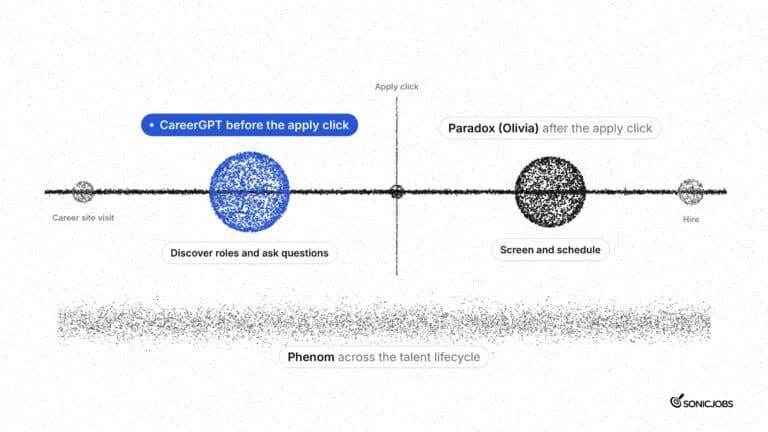
SonicJobs positions itself as “The Answer Engine Optimization Platform for Jobs & Careers.” Its GPT Suite, CareerGPT, the Insights Portal, and SonicJobs Employer GPT Visibility, addresses the candidate-language gap at three points: capturing what candidates ask, identifying where your content fails to answer them, and measuring whether your revised content earns citations in AI answer engines.
CareerGPT: First-Party Intent Data From Your Own Career Site
Most employers write job and careers content based on what they want to say. CareerGPT reverses that. It sits on the employer’s career site and captures every candidate prompt as first-party intent data, surfacing the roles, benefits, and doubts candidates actually ask about. Answers are drawn only from approved content and live jobs, with sources cited. Deployment is one line of code via Google Tag Manager, live in minutes.
The results from CareerGPT: 90% of conversations reached a relevant job result; 64% led to an application start.
Insights Portal: Specific Content Gaps From Real Candidate Questions
Knowing that candidates ask about 401(k) is different from knowing that your current content leaves the question unanswered. The Insights Portal surfaces actionable recommendations from real conversation data. A representative example: “Add 401(k) detail to the benefits page, High impact.” Employers see exactly which questions their content is not resolving and can act on them directly.
An Insights Portal snapshot from SonicJobs shows 12,480+ conversations (up 38%), 87% answer coverage of tracked prompts, and an employer leading as the default answer on 6 of 10 monitored prompts.
SonicJobs Employer GPT Visibility: Know Where You Stand Before Candidates Do
ChatGPT, Claude, and Gemini do not share what candidates type. Employers cannot see the prompts, the volumes, or why a competitor gets recommended instead. SonicJobs Employer GPT Visibility closes that gap. Web agents replicate the candidate experience on each AI platform, showing employers where they appear in answers and where a competitor appears instead, before candidates see those results.
The practical use: once the Insights Portal identifies a content gap and the employer addresses it, Employer GPT Visibility confirms whether the updated content is now being cited in AI answers for relevant candidate queries. That closes the loop between candidate signal and content action.
How Candidate-Language Careers Content Improves Your Visibility in AI Answer Engines
Candidates increasingly start job research in ChatGPT, Claude, and Gemini before they visit a career site. They compare benefits, research employers, and receive job-hunting advice from AI assistants, sometimes without clicking through to any employer page at all. If your careers content does not appear in those AI-generated answers, you are invisible at the moment a candidate’s intent is highest.
What Is Generative Engine Optimization for Career Sites?
Generative Engine Optimization (GEO) for career sites means writing content that is discoverable, quotable, and trustworthy to large language models such as ChatGPT, Gemini, Claude, and Perplexity. The goal is to be cited in AI-generated answers, not just ranked on Google. SEO and GEO overlap, but they are not the same: a page can rank well on Google and never appear in an AI answer, and vice versa.
Why Q&A Structure Gets Cited
Large language models extract and cite content more reliably when pages front-load a direct answer to the candidate’s question. A job page that opens with “Competitive compensation” gives an LLM nothing quotable. A page that opens with “Starting pay is [£X] per hour, paid weekly every Friday” gives the model a complete, self-contained answer it can surface verbatim. Joveo’s career site GEO guidance makes this explicit: write clear question-and-answer content that an LLM can lift verbatim.
JobPosting Schema: Accurate, Valid, and in Sync
Structured data matters here for the same reason it always has: it tells machines what a page is about. For GEO specifically, valid JobPosting schema needs to stay accurate and in sync with the visible page content. Schema that lists a salary range your page no longer shows, or a location that has changed, creates a credibility gap that reduces the likelihood of citation. Get the schema right, keep it current, and make sure the visible copy matches it exactly.
The Problem Candidate Language Solves for AI Visibility
Candidates start in ChatGPT and ask in natural sentences: “Does [Employer] offer weekend shifts?” or “Does [Employer] pay weekly?” An LLM answering that question will cite the source that most directly answers it. If your careers page uses recruiter language (“flexible scheduling available,” “competitive remuneration package”), the model has no clean answer to extract. Rewriting that copy in the words candidates actually use is both a candidate experience improvement and a GEO tactic.
SonicJobs Employer GPT Visibility: Measurement, Not Guesswork
ChatGPT, Claude, and Gemini share no search data with employers. No employer can see the prompts candidates type, the volume of queries, or why a competitor gets recommended instead. Everyone is, as SonicJobs puts it, optimizing in the dark. SonicJobs Employer GPT Visibility addresses this directly. Its web agents replicate the candidate experience on ChatGPT, showing employers where they appear as the default answer for a given search query and where a competitor appears instead. That visibility lets recruiting and content teams make specific improvements rather than guessing at what to fix.
For employers rewriting careers content in candidate language, Employer GPT Visibility functions as the measurement layer: you change the copy, then you can see whether the change moves your position in AI-generated answers before candidates do.
Key Takeaways and How to Get Started with Candidate-Language Job Content
Four content categories drive most of the friction between a candidate and an application: pay, schedule, benefits, and eligibility. When those categories are written in the words candidates actually use, the content answers the question they came with rather than restating the job in HR terminology.
Knowing which copy to fix is the harder part. CareerGPT captures every candidate prompt on the employer’s career site as first-party intent data, surfacing the roles, benefits and doubts candidates actually ask about. When a particular question keeps appearing without a clear answer, that gap shows up as a specific recommendation, for example: “Add 401(k) detail to the benefits page, High impact.” Employers do not have to guess where to start.
Writing better copy also affects where that content appears. AI answer engines including ChatGPT, Claude and Gemini now answer job-related questions directly, often before a candidate reaches any career site. SonicJobs Employer GPT Visibility shows employers where they appear across those platforms and where a competitor is answering instead. The goal is to know that before candidates do.
90% of CareerGPT conversations reached a relevant job result and 64% led to an application start. Candidate-language copy, grounded in real question data, is what makes those conversations productive.
To see where your career site content gaps are and how your employer brand ranks in AI answer engines, visit SonicJobs to explore CareerGPT and Employer GPT Visibility.
FAQs About Writing Job Descriptions in Candidate Language
What is candidate language, and why does it matter for job descriptions?
Candidate language is the phrasing real people use when searching for work: “Do you pay weekly?” or “Are there weekend shifts?” rather than “dynamic environment” or “fast-paced culture.” An AdView analysis of over one million job ads found that terms like “fast-paced,” “dynamic,” and “team player” are the most common jargon in job postings, language that is obvious to insiders but opaque to career-changers and first-time applicants. Writing in candidate language closes that gap and makes content quotable by AI answer engines that are looking for direct, plain answers.
How do I rewrite ‘competitive compensation’ so candidates get the answer they need?
Replace the phrase with the hourly rate or salary range, stated with a unit and a pay period: “$22-$26 per hour, paid weekly” answers the question; “competitive compensation” does not. A Pin study of 29,000-plus job descriptions found that only 47.4% disclose salary, yet posting a salary range outperforms hiding it on every funnel metric measured. When actual figures are not yet confirmed, use bracketed placeholders, for example “[$X-$Y per hour]” so the structure of the answer is correct even before final numbers are approved.
What questions do candidates ask most often on employer career sites?
The top question categories on employer career sites are Pay and tips (34%), Flexible hours (27%), Benefits (22%), and Training (11%). Those four categories cover most of the factual information candidates need before they apply, and most of it is either absent from standard job descriptions or buried in generic language. Structuring career content around those four priorities directly addresses the questions candidates are arriving with, rather than the overview an employer wants to provide.
How does CareerGPT help employers identify what language to use in job and careers content?
SonicJobs CareerGPT captures every candidate prompt on the employer’s career site as first-party intent data, showing the roles, benefits, and doubts candidates actually raise in their own words. That data feeds specific gap recommendations: for example, “Add 401(k) detail to the benefits page, High impact” surfaces directly in the employer view. Because AI assistants like ChatGPT, Claude, and Gemini share no search data with employers, the conversation records CareerGPT collects are the only source of this candidate-intent signal available to a recruiting team.
What is the difference between employer jargon and candidate language in job postings?
Employer jargon is phrasing that makes sense inside the organization but communicates nothing concrete to an outside reader. “Competitive salary,” “dynamic team,” and “collaborative environment” are all written from the employer’s perspective. Candidate language is the actual question the candidate types: “What does this job pay?” or “Will I work nights?” The distinction matters because jargon passes the internal review and fails the candidate. A quick check: if a phrase cannot be converted into a specific fact or direct answer, it is jargon.
How do I write shift and schedule information so candidates know immediately if the role works for them?
State the shift window, rotation pattern, weekend frequency, and any on-call requirement explicitly. “Monday to Friday, 7 am-3 pm, no weekends” is usable; “flexible scheduling” is not. Dover’s 2026 job description guidance notes that vague location and scheduling language reads as evasive rather than flexible, particularly now that hybrid and varied-shift roles are common. The same logic applies to schedule: candidates need to compare the role against their own availability before they apply, and a vague description forces them to guess or move on.
What benefits details do candidates want answered before they apply?
Candidates consistently ask three things about benefits: when coverage starts, how much the employer contributes, and when employer retirement contributions vest. A gap between a start date and coverage beginning can leave a new hire uninsured for weeks. For retirement plans, the vesting schedule determines whether employer contributions are actually kept if the employee leaves early. Stating “Health coverage begins day one” and “401(k) with [X]% employer match, vesting after [Y] months” answers the questions candidates are already forming before they open the application.
How does writing in candidate language help job postings appear in ChatGPT, Claude, and Gemini answers?
Large language models extract and cite content that is written as a direct, specific answer. Joveo’s career site GEO guide recommends writing clear question-and-answer content that an LLM can lift verbatim, paired with accurate structured data. A separate recommendation from Gravitas Vision reinforces that front-loading a concise answer to the user’s main question improves the likelihood of being cited. Job content written as “Pay: $22 per hour, paid weekly” or “Schedule: rotating weekends, two on, two off” fits that pattern; generic paragraphs do not.
What is a content gap in a career site, and how do I find mine?
A content gap is a question candidates ask that no page on the career site answers. If ten candidates open CareerGPT and ask about the 401(k) match and CareerGPT cannot find a sourced answer, that is a content gap with a measurable impact on application starts. SonicJobs surfaces these gaps through the CareerGPT Insights Portal, which converts candidate conversation data into prioritized recommendations. Because most employers have no visibility into what AI assistants return for their candidate searches, the gap often exists on both the career site and in external AI answers simultaneously.
How does SonicJobs Employer GPT Visibility help me measure whether my careers content is visible in AI answers?
SonicJobs Employer GPT Visibility uses web agents to replicate the candidate experience on ChatGPT, Claude, and Gemini, showing employers where they rank for relevant queries and where a competitor appears instead. The tool shows ranking position and citation structure, so employers can see which pages are being pulled into AI answers and which are being ignored. The stated goal is to let employers know where they are the default answer and where a competitor is, before candidates find out. No other SonicJobs product replicates that specific measurement.
What eligibility details should I always include in a job description?
Every job description should state the pay rate with a unit and pay period, the benefits start date, the employer’s retirement contribution and its vesting schedule, the shift pattern with specific hours and days, and the location or remote split written plainly. These are the details candidates need to answer their own screening questions before applying. Omitting any of them pushes candidates toward a follow-up question the career site cannot answer, which increases exit rates and reduces the chance of an application start.
How do I use a before/after rewrite to improve my job descriptions?
Identify the employer phrase, find the candidate question it fails to answer, and rewrite with the specific fact. “Competitive compensation” becomes “[$X-$Y per hour], paid [weekly/biweekly].” “Comprehensive benefits” becomes “Medical, dental and vision from day one; 401(k) with [X]% match.” SonicJobs CareerGPT data shows which descriptions generate the most unanswered candidate questions, so employers can prioritize rewrites by impact rather than working through every posting in sequence. Start with the roles that generate the highest volume of benefit and pay questions, because those are the gaps already costing application starts.